


 下载APP
下载APP 报料
报料 关于
关于
中国日报双语新闻 2026-03-17 17:00:53
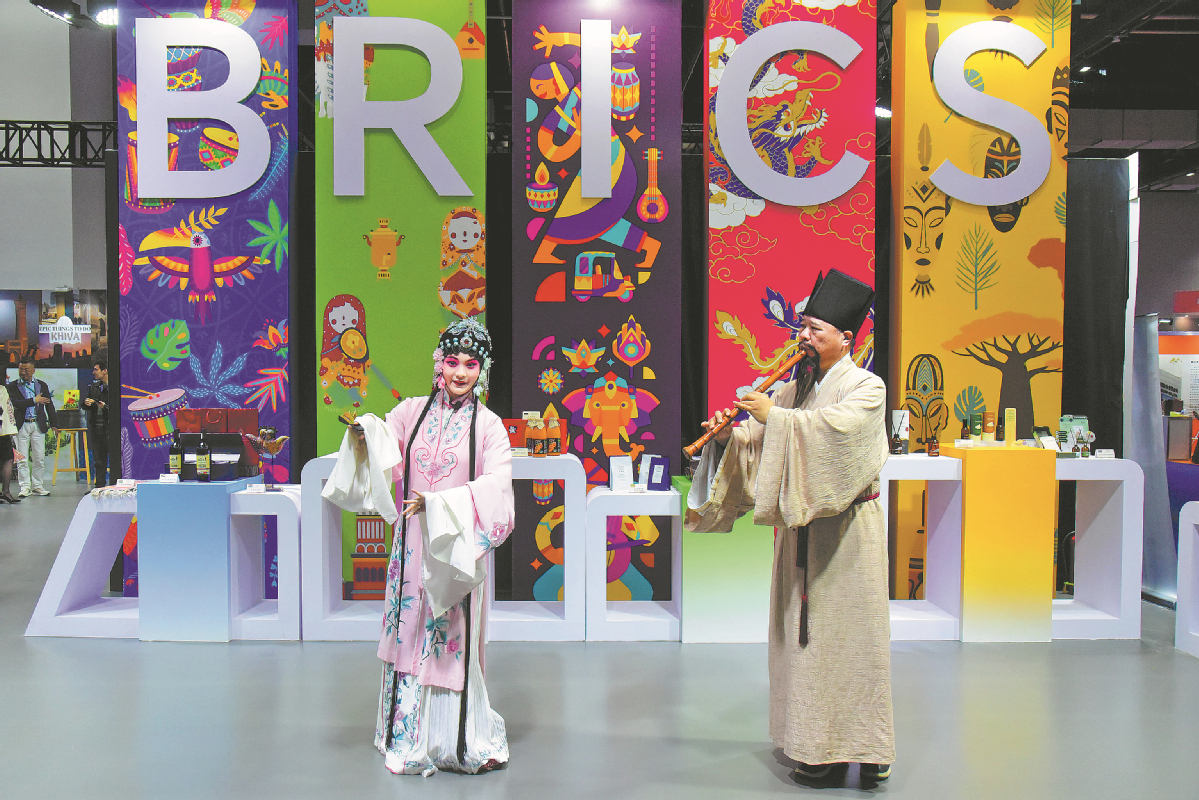
The "Big Market for All: Export to China" initiative will create new channels for foreign products and services to access the Chinese market, highlighting the country's commitment to expanding unilateral opening-up and the opportunities offered by its consumption upgrading, said government officials and business leaders.
Speaking during the ongoing "Buy Global in Zhejiang, Drive Consumption with Hangzhou" campaign — part of the initiative held in Hangzhou, Zhejiang province from Sunday through Tuesday, they said the event will help facilitate imports, connect overseas suppliers with Chinese buyers and expand trade cooperation.
The "Big Market for All: Export to China" initiative was launched in November with the objective of expanding China's import channels and bringing more high-quality foreign products and services into its market.
Spanning 20,000 square meters, the event comprises two main exhibition zones featuring imported goods from multiple countries, with intended import deals expected to reach 30 billion yuan ($4.35 billion), said the Hangzhou municipal government, one of the campaign's organizers.
Xiao Lu, deputy director-general of the department of foreign trade at the Ministry of Commerce, said these efforts highlight China's determination to expand unilateral opening-up and translate its vision of building a community with a shared future with the world into concrete action.

"Through tangible measures, China aims to broaden global trade opportunities and better address the expectations of its partners," said Xiao.
Zhejiang is not only a major foreign trade hub, but also a leading importer in China. The eastern province has also fostered new trade formats such as cross-border e-commerce and digital trade, giving it a unique advantage in integrating online and offline commerce, she added.
According to statistics from Hangzhou Customs, Zhejiang's total imports and exports reached 989.01 billion yuan in the first two months of 2026, up 17.1 percent year-on-year.
Meanwhile, the province's imports of mechanical and electrical products totaled 34.79 billion yuan, up 16.1 percent year-on-year, while consumer goods imports rose 13 percent on a yearly basis to 24.46 billion yuan.
Chen Zhicheng, deputy director-general of the Zhejiang Provincial Department of Commerce, said that more than 20 import-related events will be held across Zhejiang, covering all prefecture-level cities, with efforts focusing on both bulk and high-tech products while introducing more high-quality consumer goods.
Wang Yongfang, head of the Hangzhou Municipal Bureau of Commerce, said Hangzhou will amplify the spillover effects of this event and strive to promote coordinated progress in four areas.
"These four areas of coordination cover cross-border e-commerce, bulk trade, BRICS cooperation and the exhibition economy," said Wang, adding that the goal is to turn the influence of a single exhibition into a long-term trade ecosystem.
According to the outline of the 15th Five-Year Plan (2026-30) for national economic and social development, China will strengthen coordination between imports and exports, place equal emphasis on trade in goods and services, and better integrate efforts to attract foreign investment and promote outbound investment.
Henry Tan, vice-chairman and CEO of the Hong Kong Special Administrative Region-based Luen Thai Group, said China's institutional strengths, sound legal framework and clear development plans provide businesses with a stable and predictable environment.
The country's continued opening-up also enables multinational corporations to invest and plan for the long term with greater confidence despite moderating global demand, said Tan.
Similar views were shared by Wu Dongming, CEO for China at DHL Express.
"We have witnessed and actively participated in China's efforts to boost consumption while stabilizing foreign trade," Wu said, adding that the German company will expand its aviation network and upgrade infrastructure, including facilities in Shanghai and Shenzhen, Guangdong province, to ensure the rapid and efficient inflow of high-quality international goods, and better support China's consumption upgrading.
责编:田梦瑶
一审:田梦瑶
二审:秦慧英
三审:张权
来源:中国日报双语新闻
我要问
 湘公网安备 43010502000374号